Benefits of Turmeric Supplements
- 9/29/26
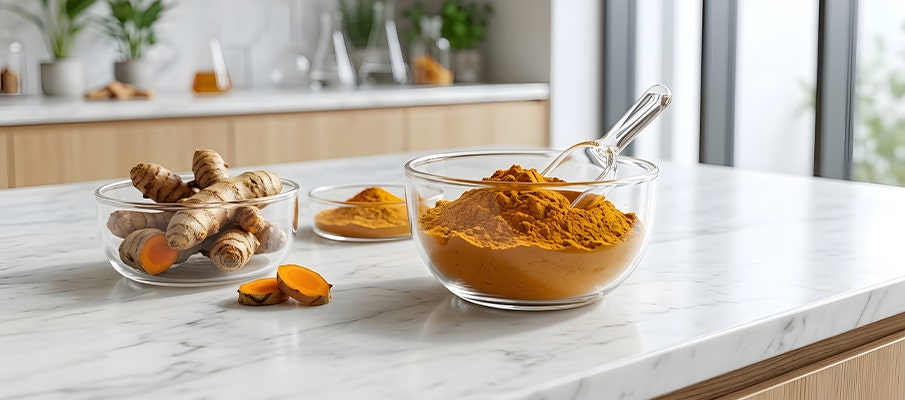
Turmeric has been used for centuries as a culinary spice and as part of traditional wellness practices. Today, you’ll find the golden-yellow spice in everything from curries and lattes to capsules, gummies, and powders.
But what is turmeric good for, and is adding a turmeric supplement to your routine worthwhile?
Here’s what you should know about the potential benefits of turmeric, including its role in supporting joint health, and easy ways to incorporate more turmeric into your routine.
Key takeaways
- Turmeric is a plant in the ginger family that has been used for centuries in cooking and traditional wellness practices.
- Curcumin is one of the naturally occurring compounds in turmeric and is responsible for its characteristic yellow color.
- Turmeric supplements can help support the body’s healthy inflammatory function and antioxidant response.†
- Turmeric may also help support joint health and mobility.†
- Turmeric can be added to your routine through food and beverages or taken in supplement form.
What is turmeric?
Turmeric (Curcuma longa) is a plant related to ginger that is grown primarily in India and Southeast Asia. The underground stem, or rhizome, of the plant can be used fresh or dried and ground into a golden yellow spice. It has a long history of culinary use, particularly in Indian and Southeast Asian cooking. It has also been used for thousands of years in traditional wellness practices.
Turmeric contains naturally occurring plant compounds called curcuminoids. The best known of these compounds is called curcumin, which has been widely studied for its role in supporting the body’s antioxidant response and healthy inflammatory function.†
A 2024 systematic review and meta-analysis found that curcumin supplementation was associated with favorable changes in several inflammatory and oxidative stress biomarkers.
Keep in mind that turmeric and curcumin aren’t exactly the same thing. Turmeric is the whole plant ingredient, while curcumin is a compound found in turmeric. This distinction is important when comparing turmeric supplements because the amount and form of curcumin can vary between products.
Benefits of turmeric
So, what is turmeric good for? While research continues to explore its potential uses, several areas have received particular attention.
Supports a healthy inflammatory response†
Inflammation is part of the body’s normal response to everyday challenges. A healthy inflammatory response is an important part of maintaining overall health.
Curcumin-containing turmeric supplements may help support the body’s healthy inflammatory function.† Research has examined curcumin’s effects on multiple biomarkers involved in the body’s inflammatory response, although formulations and dosages vary considerably between studies.
Because turmeric supplements can differ significantly, research on one curcumin formulation cannot necessarily be applied to every turmeric product.
Supports antioxidant activity†
Turmeric also has antioxidant properties. Antioxidants help neutralize free radicals, unstable molecules that can damage cells when they build up in the body. A 2024 review found that curcumin supplementation was associated with improvements in several markers of antioxidant activity and oxidative stress.
Supports joint health and mobility†
Turmeric may also help support joint health and mobility. A 2024 review found that curcumin supplementation was associated with improvements in measures of joint comfort, mobility, physical function, and stiffness. These benefits may be related, in part, to curcumin’s role in supporting a healthy inflammatory response.
How to get more turmeric in your routine
You can add turmeric to your routine in a variety of ways. Here are several easy ways to incorporate this colorful spice into your day.
Cook with turmeric. Turmeric works well in curries, soups, stews, rice dishes, roasted vegetables, and marinades. It pairs well with ginger, cumin, coriander, and black pepper.
Make a turmeric latte. A warm turmeric drink can be an easy way to enjoy the spice. Try this Turmeric Collagen Oat Milk Latte for a different way to incorporate turmeric into your routine.
Add it to breakfast. Turmeric doesn’t have to be limited to savory meals. Try this Turmeric Collagen Mango Granola, which combines turmeric with mango, coconut, and warming spices.
Consider a turmeric supplement. Supplements offer a convenient way to incorporate a consistent amount of turmeric or curcumin into your daily routine. Because formulations vary, read the Supplement Facts panel and follow the product’s recommended serving instructions.
Some formulations also include ingredients intended to support bioavailability or digestion. For example, Garden of Life Organics Extra Strength Turmeric combines whole turmeric and ginger root fermented to support bioavailability and includes organic black pepper extract and probiotics for enhanced digestion.†
Frequently asked questions about turmeric supplements
What is the difference between turmeric and curcumin?
Turmeric refers to the whole plant, while curcumin is one of several naturally occurring curcuminoids found within turmeric. Curcumin has been the focus of substantial scientific research.
What are the main benefits of turmeric supplements?
Turmeric supplements containing curcumin can help support the body’s healthy inflammatory function and antioxidant response.† Certain turmeric supplements are also formulated to support joint health and mobility.†
Can I get turmeric from food instead of supplements?
Yes. Turmeric can be used as a spice in a wide variety of foods and drinks. A supplement may be useful for people who want a convenient and consistent way to incorporate turmeric into their daily routine.
Are turmeric supplements safe?
Conventional oral turmeric and curcumin supplements are generally considered safe for most people when used in recommended amounts.
Talk with your healthcare provider before adding a turmeric supplement to your routine, particularly if you take medication, have a medical condition, are pregnant or breastfeeding, or are preparing for surgery.
From adding turmeric to your favorite recipes to choosing a supplement that fits your wellness goals, there are plenty of ways to incorporate this golden spice into your routine. Explore our Garden of Life turmeric products to find an option that works for you.
†These statements have not been evaluated by the Food and Drug Administration. This product is not intended to diagnose, treat, cure, or prevent any disease.
References
- Turmeric. NCCIH. Accessed August 11, 2026. https://www.nccih.nih.gov/health/turmeric
- Jafari A, Abbastabar M, Alaghi A, Heshmati J, Crowe FL, Sepidarkish M. Phytother Res. 2024;38(12):6048-6061.
- Dehzad MJ, Ghalandari H, Nouri M, Askarpour M. Cytokine. 2023;164(156144):156144.
- Kavyani Z, Najafi K, Naghsh N, Karvane HB, Musazadeh V. Prostaglandins Other Lipid Mediat. 2024;174(106867):106867.
- Bideshki MV, Jourabchi-Ghadim N, Radkhah N, et al. Phytother Res. 2024;38(6):2875-2891.